
PDC drill bits are one of the fastest, most efficient tools for drilling through soft, medium, and hard geological formations. Whether you're drilling hydrological holes, geotechnical boreholes, mining tunnels, or water wells, PDC (Polycrystalline Diamond Compact) bits offer high penetration rates, excellent durability, and low drilling cost per meter.
However, to fully benefit from PDC diamond drilling bits, beginners must understand the proper setup, operational technique, and how to match the bit to the formation. Poor technique can reduce drilling speed, damage the cutters, or increase wear.
In this guide, you’ll learn exactly how to drill with PDC bits, including setup, RPM recommendations, weight-on-bit (WOB), fluid management, troubleshooting, and safety.
What Are PDC Bits? (Quick Overview)A PDC bit uses synthetic diamond cutters placed on blades or wings to shear rock as the bit rotates. Unlike tricone bits that crush rock, PDC drilling uses shearing, which is faster, cleaner, and more energy-efficient.
FSDRILL PDC Models Examples:
- 3-Wing Concave Spiral PDC Bit — ideal for hydrological drilling and soft/medium strata
- 3/4/5-Wing Concave Bits — mining & tunneling
- 5-Wing PDC Non-Coring Bit — for granite and hard rock
- Dual-Tube PDC Core Bit — for high core recovery
- High-Speed Spiral PDC Core Bit — water wells, sand, clay, cobble
- Tri-Wing Scraper Bit — fast penetration in loose strata
Regardless of the model, all PDC bits follow similar operating principles.
Why PDC Bits Require Proper Technique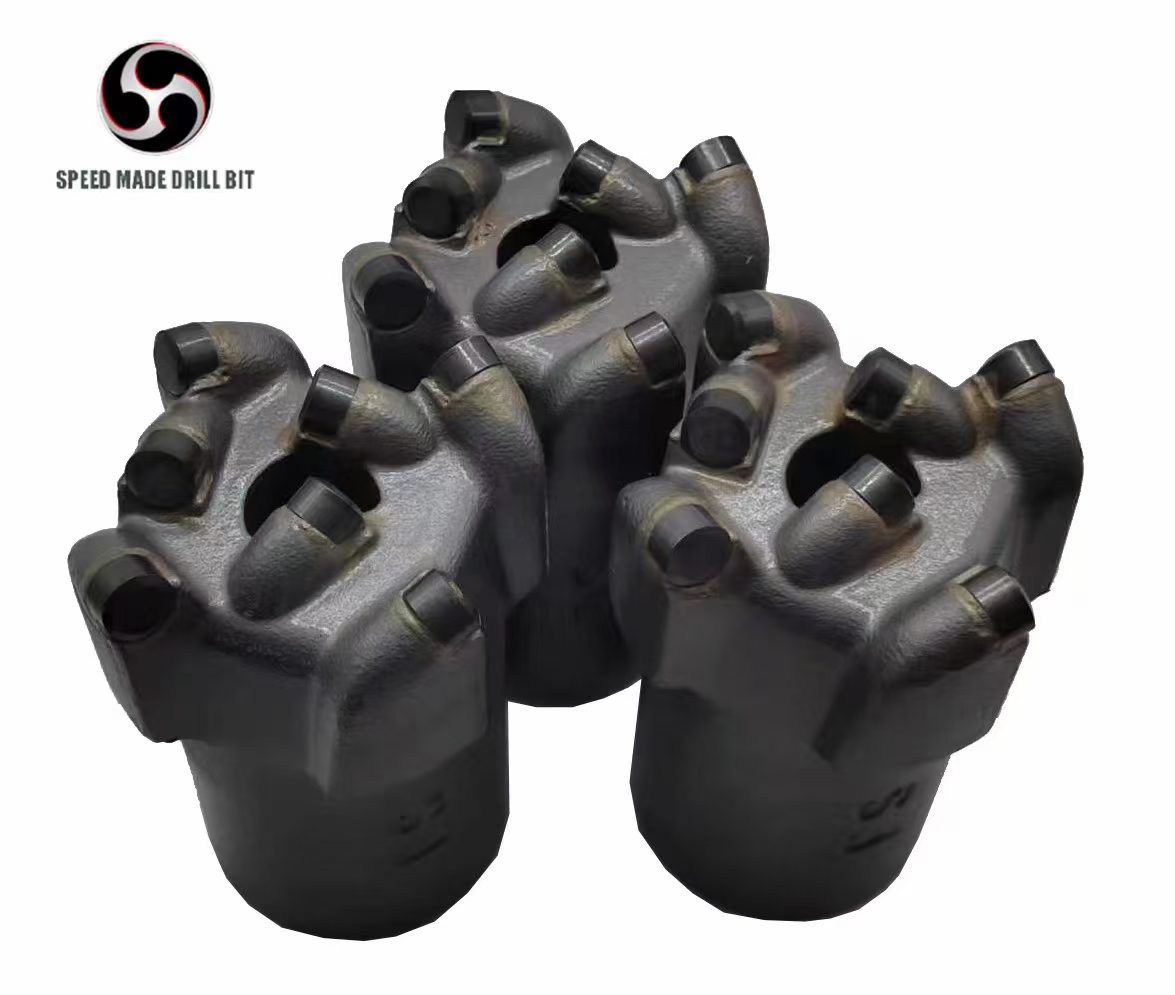
Because PDC cutters are extremely sharp and hard, they offer very high penetration if used correctly. But incorrect drilling technique may cause:
- Cutter chipping
- Bit balling
- Vibration & bit whirl
- Low ROP (Rate of Penetration)
- Overheating
- Premature failure
Proper technique ensures long service life and maximum drilling efficiency.
How to Drill with PDC Bits: Beginner TechniquesBelow is the complete beginner-friendly drilling method.
Choose the Right PDC Bit for the FormationMatching bit to formation is the most important step.
Soft Soil, Sand, Backfill, Clay
3-wing or 4-wing bits
Concave design
High ROP
Example:
3-Wing Spiral PDC Bit | High-Speed Spiral Core Bit
Medium Formations (Dolomite, Limestone, Sandstone)
Flat-top 4-wing bits
Moderate cutter aggressiveness
Example:
Flat-Top 4-Wing Non-Coring Bit
Hard Rock (Granite, Basalt, Dolomite Layers)
5-wing heavy-duty bits
Reinforced matrix body
High-impact cutters
Example:
5-Wing PDC Non-Coring Bit
Geological Sampling
Dual-tube core bits
Spiral crown core bits
Example:
Dual-Tube PDC Core Bit
PDC bits perform best with moderate to high RPM, depending on formation.
General RPM Guide:
| Formation | Recommended RPM |
| Soft formations | 180–250 RPM |
| Medium formations | 120–180 RPM |
| Hard formations | 60–120 RPM |
Too-high RPM in hard rock may chip cutters. Too-low RPM in soft strata reduces ROP.
Apply Proper Weight-on-Bit (WOB)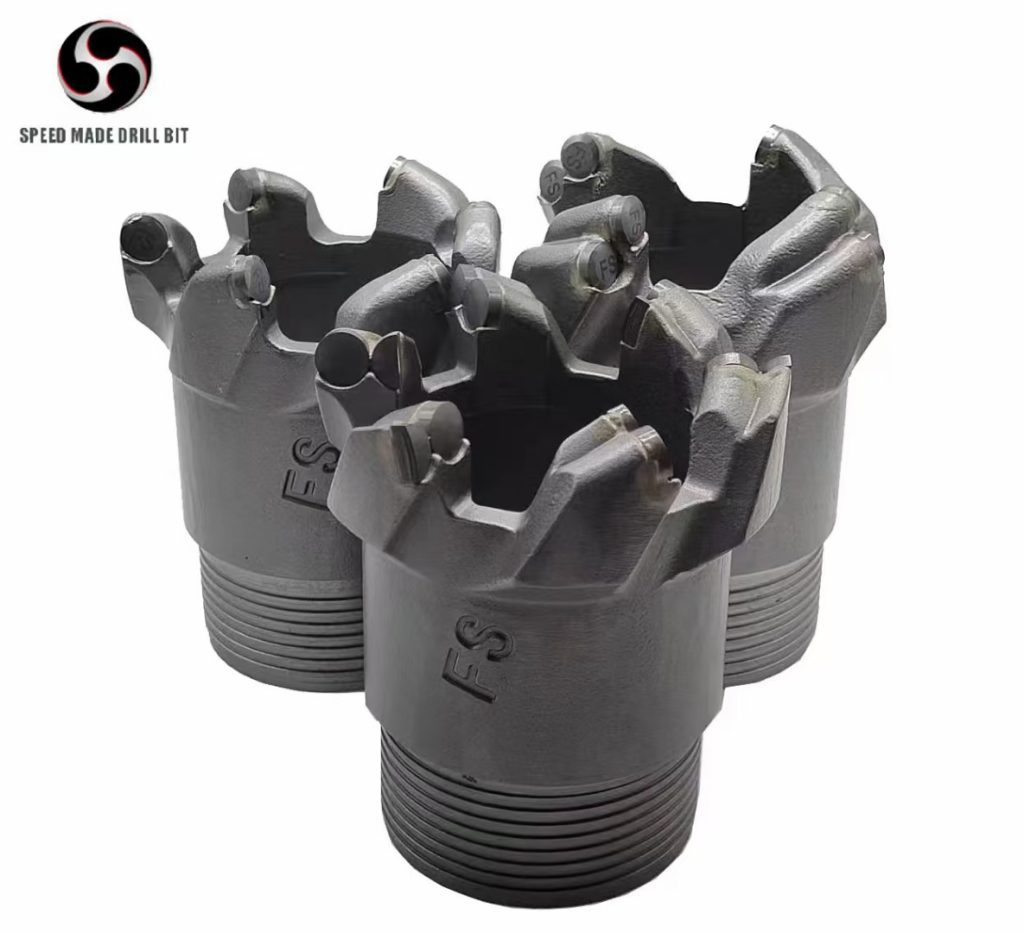
WOB is the downward force applied to the bit.
Recommended WOB:
- Soft formations: Low WOB
- Medium formations: Moderate WOB
- Hard formations: Higher WOB, but controlled
Excessive WOB can overload cutters and cause early failure.
Use Sufficient Drilling FluidPDC bits generate fine cuttings that must be cleared quickly.
Drilling fluid functions:
- Cooling the bit
- Reducing friction
- Removing cuttings
- Preventing borehole collapse
- Flushing abrasive materials
FSDRILL bits feature optimized nozzle designs for proper fluid flow.
Water Well Drilling
Use clean water + polymers (optional).
Mining / Geotechnical
Use bentonite or polymer mud for stability.
Maintain Hole Stability & Minimize Deviation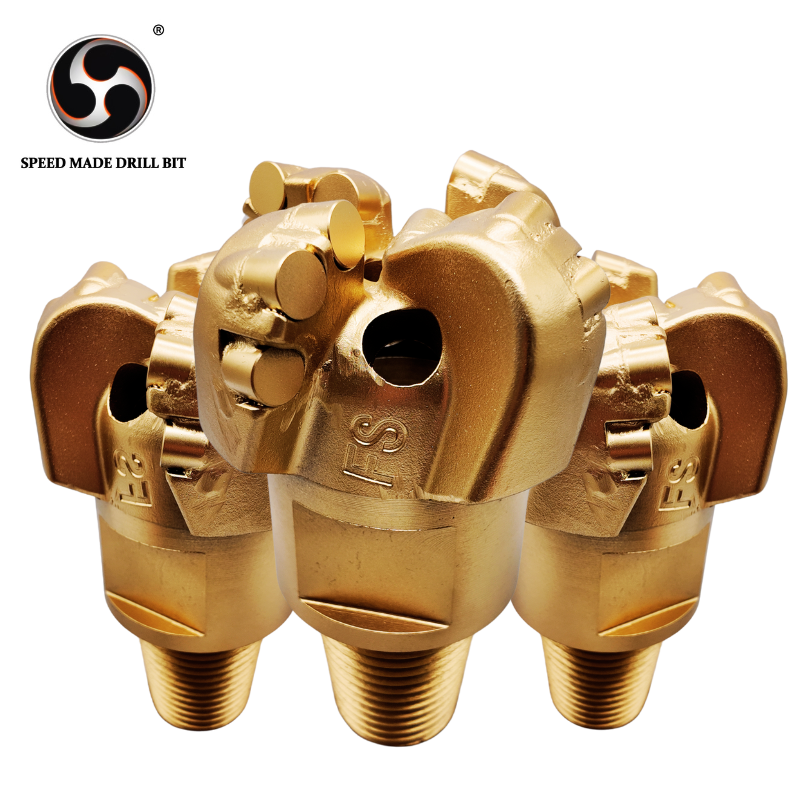
PDC bits cut fast — which may cause deviation if not controlled.
To maintain straight drilling:
- Start with low RPM
- Build speed after alignment
- Use stabilized drill rods
- Avoid sudden direction changes
- Ensure uniform WOB
- Use spiral or concave designs (FSDRILL’s specialty)
Never start drilling when:
- Steel casing is protruding
- Old drill rods remain in the hole
- Rebar or steel fragments exist
PDC cutters can chip immediately on metal impact.
Monitor ROP (Rate of Penetration)ROP helps identify bit performance.
Signs to monitor:
ROP Increasing
Great — bit is cutting efficiently.
ROP Drops Suddenly
Possible causes:
- Blunt cutters
- Harder formation encountered
- Bit balling
- Insufficient fluid flow
ROP Fluctuates
Possible drill string instability.
Inspect the Bit RegularlyStop drilling periodically to check for:
- Cutter wear
- Cracks in matrix
- Chip damage
- Balling or clogging
- Gauge wear
FSDRILL’s matrix bits resist heavy abrasion but still require inspection.
Stop Immediately if Bit Whirl OccursBit whirl = dangerous vibration that damages cutters.
Fix by adjusting:
- RPM
- WOB
- Stabilizers
- Drilling fluid
- Bit design (choose concave/spiral)
A worn bit gives:
- Lower ROP
- Higher torque
- More heat
- Poor hole quality
Replacing early prevents damage to the strata or drill string.
Beginner Mistakes to AvoidUsing too much force (WOB)
PDC cutters work by slicing, not crushing.
Running at extremely high RPM
Especially damaging in hard rock.
Insufficient fluid
Leads to overheating & bit balling.
Starting drilling at an angle
Causes deviation & cutter damage.
Ignoring formation changes
Soft → hard = sudden cutter failure.
Using the wrong bit design
Wing count & face shape must match formation.
Which FSDRILL PDC Bit Should Beginners Use?Here’s a simplified beginner guide:
For soft strata (sand, clay, soil):
3-Wing Concave PDC Bit
Tri-Wing Scraper Bit
For medium strata (dolomite, limestone):
4-Wing Flat-Top PDC Bit
3/4/5-Wing Concave Bit
For hard rock (granite, cobble):
5-Wing Non-Coring Bit
High-Speed Spiral Core Bit
For core sampling:
Dual-Tube PDC Core Bit
PDC Crown Core Bit
FSDRILL PDC bits offer:
High penetration rates (up to 15–30 m/hr)
Stable drilling in backfill, dolomite, sandstone, granite
Heavy-duty matrix alloy for long lifespan
API-compatible threads
Customizable bit diameters
Anti-blocking spiral designs (for core bits)
Suitable for tender bids & bulk projects
Frequently Asked Questions
How do you drill with PDC bits?
Use controlled RPM, proper WOB, and sufficient drilling fluid. Match the bit to the formation and avoid sudden force or drilling into metal.
Are PDC bits suitable for beginners?
Yes. PDC bits are easy to operate if you follow basic drilling rules. They shear rock efficiently and work well in soft, medium, and hard formations.
What RPM should I use with a PDC bit?
Typically 60–250 RPM depending on formation hardness. Harder formations require lower RPM.
Can PDC bits drill hard rock like granite?
Yes. FSDRILL’s 5-Wing Non-Coring PDC Bit and Spiral Core Bits are designed for granite, dolomite, and high-compressive formations.
What fluid should I use for drilling with PDC bits?
Water, mud, or polymer drilling fluid depending on formation. Adequate cooling and cuttings removal is essential.
What PDC bit type is best for core sampling?
Dual-tube PDC core bits or PDC crown bits ensure high core recovery and stable drilling.
Can PDC bits be used for oil well drilling?
Yes. PDC technology is widely used in oilfield drilling. Many FSDRILL models are suitable for oil exploration, depending on diameter and well design.
Conclusion
Drilling with PDC bits is efficient, fast, and highly effective — but it requires proper technique. Beginners should focus on using the correct bit type, applying moderate WOB, maintaining proper RPM, and ensuring adequate fluid flow.
FSDRILL’s wide range of PDC bits — from 3-wing and 4-wing concave models to heavy-duty 5-wing matrix bits and spiral core bits — makes it easy to choose the right bit for any formation.