Coring has two jobs: advance the hole and bring a sample back to the surface. A bit that cuts freely addresses the first. Receiving, holding and retrieving the core depend on the components behind it. That is the useful starting point for understanding double-tube coring.
The outer assembly cuts; the inner tube receives the sample
A core bit cuts an annular groove, leaving a core in the centre. The outer tube connects to the bit, while the inner tube receives the advancing sample. In a typical swivel-type double-tube design, the inner assembly is isolated from the outer assembly's rotation to reduce disturbance to the core.
Receiving the core is only part of the process. In the Q system shown in Boart Longyear's catalogue, pages 14–15, the core lifter works with its tapered case to grip the core after it breaks, allowing retrieval. Cutting, receiving and holding are separate jobs performed by a connected set of parts.
Three diameters, three different features
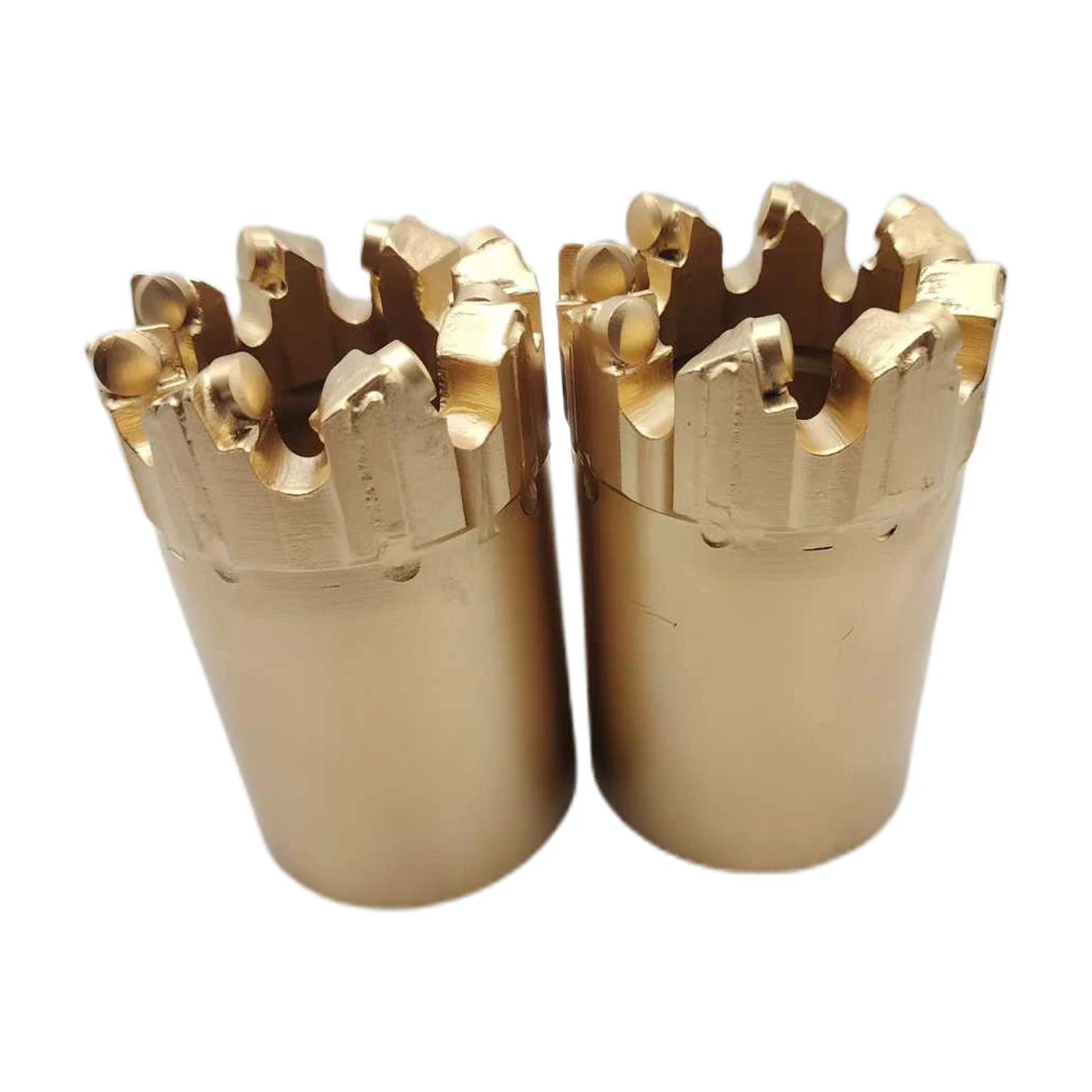
Look at the bit from the cutting end. The outside edge defines its cutting diameter; the opening in the middle forms part of the core passage. Behind that opening, the assembly also has to accommodate the tubes, their walls and working clearances.
FSDRILL's dual-tube product information records a 94 mm bit with an 89 mm core barrel. The 89 mm figure describes the barrel, not the recovered core. Reading each dimension against its component is the first step in deciding whether the assembly meets the sampling requirement.
Why drilling progress does not always mean good core recovery
The sample still has to enter the inner tube, remain held and be brought to the surface. When recovery is poor, follow that route: look at entry into the tube, the matched lifter components and the path of flushing fluid near the core. Soft or broken material makes sample disturbance a particular concern.
Boart Longyear's Q3 option adds a liner for soft or highly fractured core. Its Q TT option also uses matched components to redirect fluid away from the core-entry region. These examples show why improving sample protection can involve the barrel configuration as well as the cutting crown.
Replacing the bit or buying the assembly?
If the existing barrel works well and only the bit is worn, start with the barrel model, connection and required cutting dimensions. If the project changes the required sample size, the receiving arrangement or the retrieval method, review the bit and barrel together.
“Double tube” describes the tube arrangement. “Wireline” describes a way of retrieving the inner assembly. A purchase described by one term still needs the other parts of the system identified. An itemized assembly quotation makes clear which inner, outer and retrieval components are included.
Explore the FSDRILL dual-tube PDC core bit. For a replacement, begin with the barrel already in use. For a new project, begin with the sample you need to recover.