Numbers such as 1304, 1608 and 1613 appear throughout PDC drill-bit catalogues. They identify the cutting elements fitted to the tool. On a “1304 crown core bit,” 1304 refers to the cutters; the bit diameter and core opening are separate dimensions.
What the numbers tell you
For common cylindrical PDC cutters, the first two digits usually indicate a diameter family, while the last two suggest the overall height. The 16 family is roughly 16 mm in diameter. Between 1608 and 1613, the most obvious dimensional difference is height.
The catalogue makes those clues precise. Here are three published examples:
| Manufacturer and cutter | Diameter | Overall height |
|---|---|---|
| SML double-chamfer 1304 | 13.3 mm | 4.5 mm |
| SF Diamond 1608 | 15.88 mm | 8 mm |
| SF Diamond 1613 | 15.88 mm | 13.2 mm |
These entries come from SML's double-chamfer cutter range and SF Diamond's PDC catalogue. In the SML example, 1304 measures 13.3 mm by 4.5 mm. Reading the code literally as exactly 13 mm by 4 mm would miss both dimensions.
There is variation between manufacturers, too. Guilin Star Diamond lists SDP1608 at 16.00 mm diameter, compared with SF Diamond's 15.88 mm. That 0.12 mm difference matters when buying loose cutters or machining pockets, even though both references help identify a similar size family.
A taller cutter does not automatically mean more exposure
A PDC cutter combines a polycrystalline diamond layer with a tungsten carbide substrate. Its overall height includes the whole component. Its exposure is the portion projecting from the bit body after installation.
In the SF Diamond examples, 1613 is 5.2 mm taller than 1608. Whether that extra height sits deeper in the body or changes the cutting-edge position depends on the pocket and the layout. Looking at overall height, seating depth and installed position together explains why a cutter change can also require a pocket review.
Look at where the cutters work
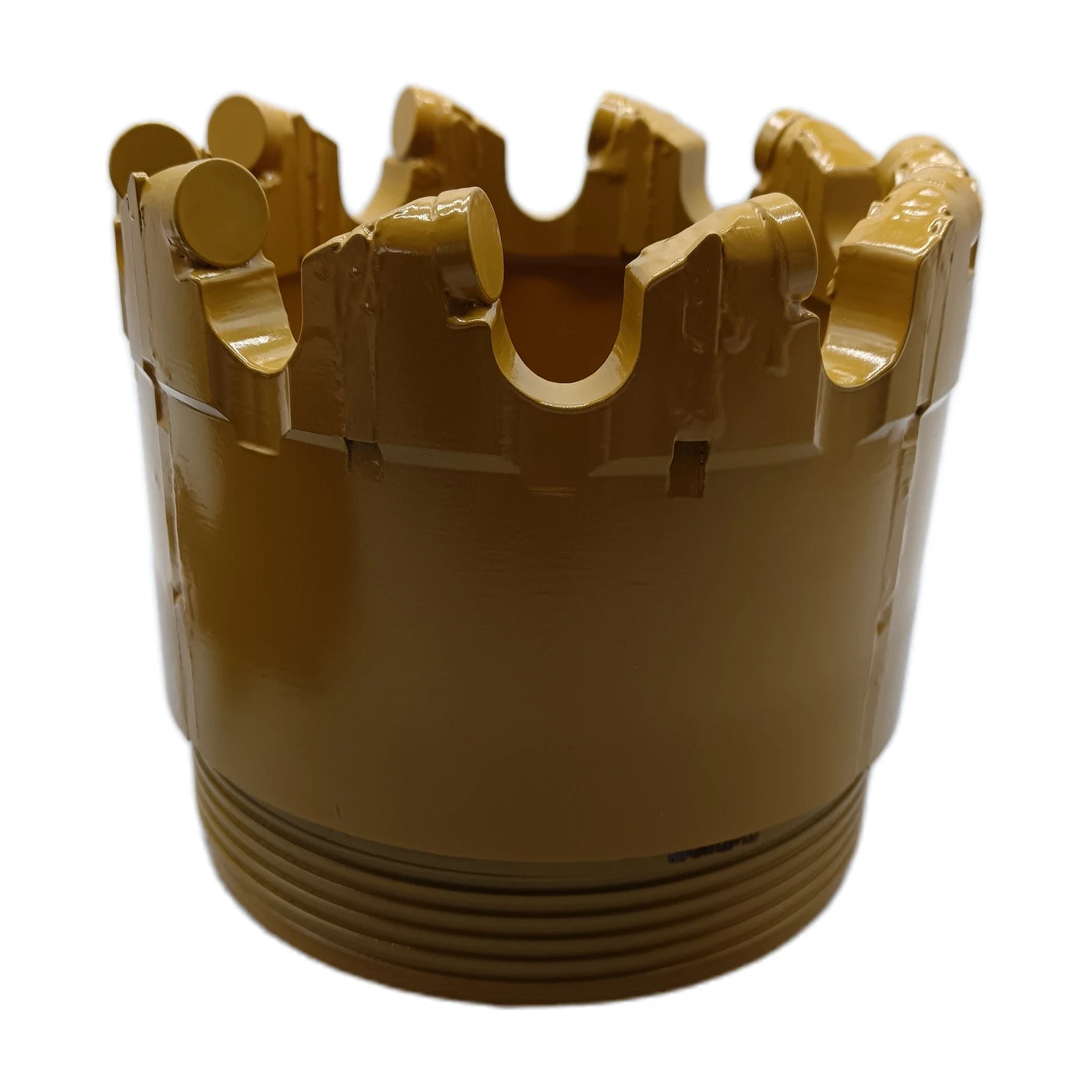
On FSDRILL's 1304 crown PDC core bits, cutters sit around an annular crown, leaving a passage for the core through the centre. Start with that ring-shaped cutting area, its outside diameter and its opening, then look at the cutters mounted on it.
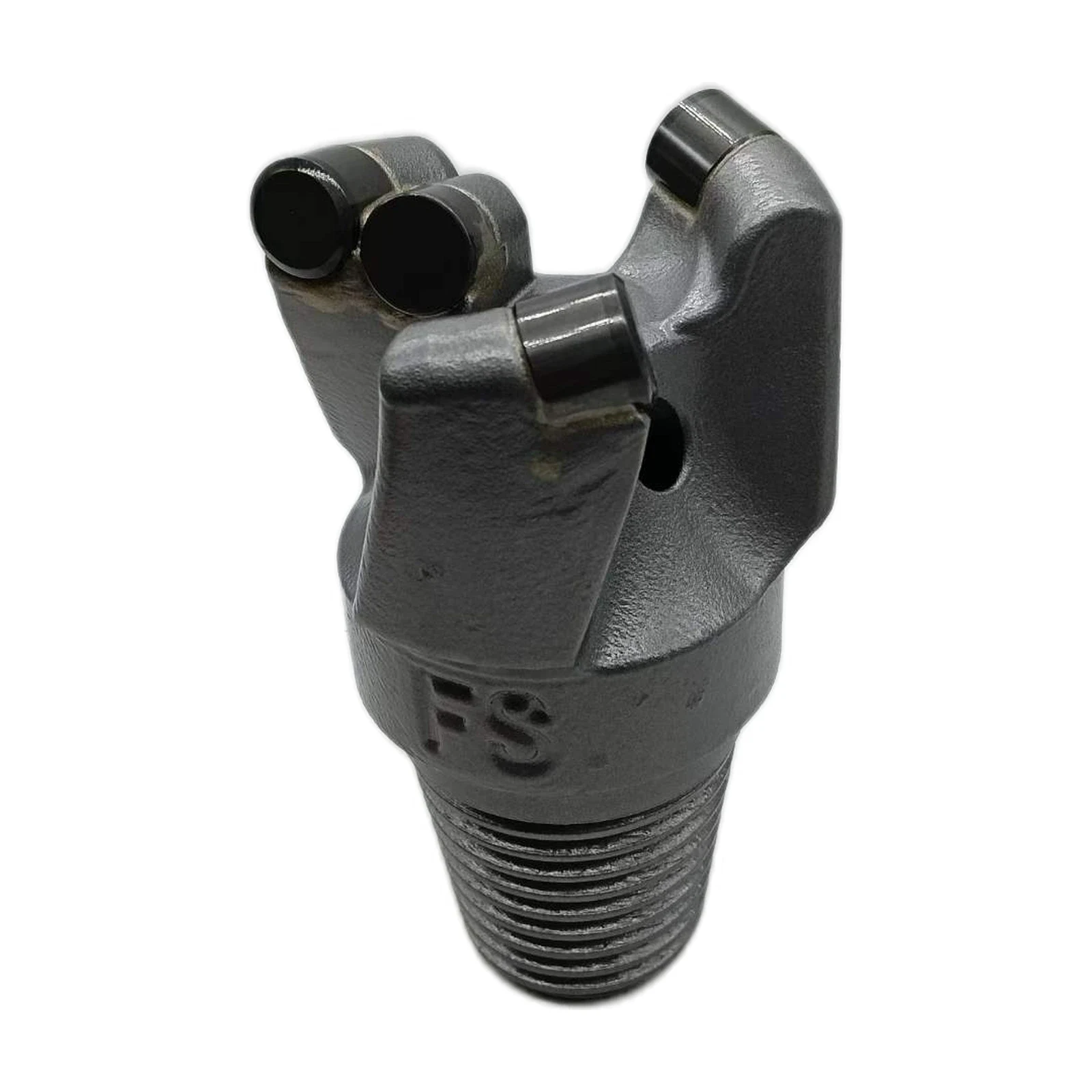
The model 80 three-wing PDC bit is documented with a combination of 1613 and 1608 cutters. For this tool, the two codes are part of the component list. Their positions on the wings complete the picture. Comparing the face layout alongside the cutter references tells you more than asking which number is larger.
Do cutters of the same size wear the same way?
Cutters of the same dimensions can have different diamond-layer designs, material grades and edge preparations. SF Diamond, for example, distinguishes impact-resistant, abrasion-resistant and general-purpose series within its range. The size code helps identify the component; it does not describe every aspect of its performance.
For a complete bit, begin with the hole diameter, coring or non-coring task, ground conditions and existing tooling. For loose cutters or an OEM body, go a step further and match the selected cutter dimensions to the pocket. The FSDRILL PDC range shows how these component choices appear in different tool layouts.