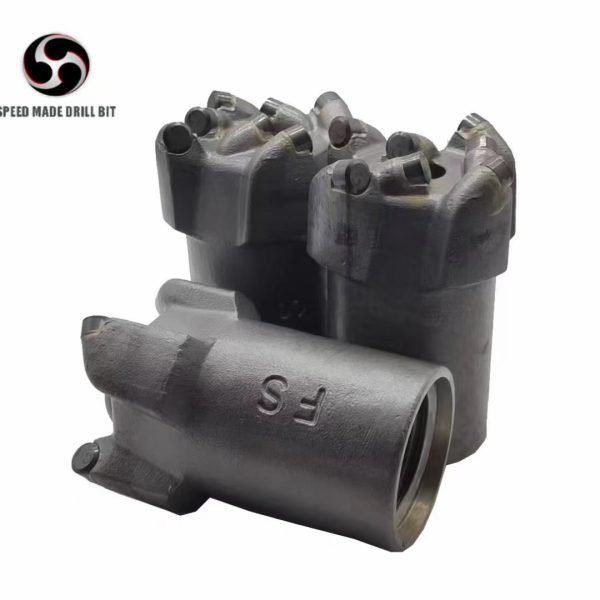
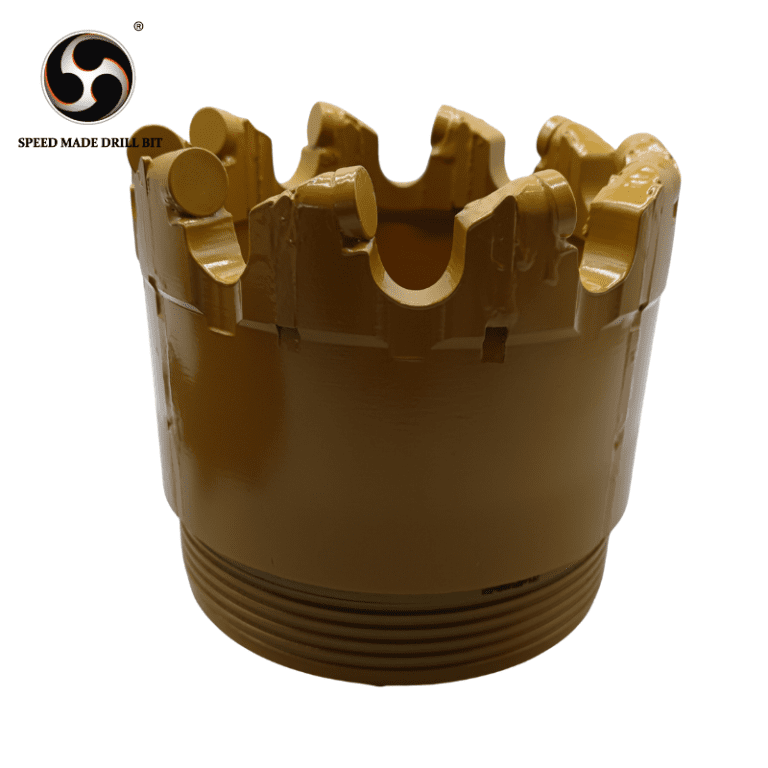
Rotation moves a PDC cutter edge through the formation while the drilling assembly applies feed load. The engaged edge cuts and shears material; the body supports the cutters and transfers force from the drill string.
Engagement depends on load and rotation
Cutter exposure and geometry affect how the edge engages the rock. Feed and rotation must be considered together with the bit, ground and rig controls. Raising rotation alone does not define a suitable drilling programme, and a speed recorded in one project should not be copied as a universal recommendation.
Flushing clears the cutting zone
The drilling fluid or air arrangement carries cuttings away and helps manage heat at the face. Channels, ports and space around the tool are part of the assembly to assess. A blocked passage, inadequate return path or changing ground can alter conditions even when the same bit remains in use.
Core and non-coring motion
An annular PDC crown cuts around the intended sample. A non-coring face cuts across the hole. A reaming assembly enlarges an existing or pilot hole through its outer cutting zone. Their geometry and drilling task determine what information is needed to discuss the operating setup.
What to record when performance changes
Record the bit and connection, formation interval, depth, rotation and feed settings, flushing method, returns, vibration and wear. Send these observations through technical support. Compare bit geometry separately from the PDC definition.
Illustrations