When looking for a replacement drill bit, most people start with the diameter: 94 mm, 113 mm, or a familiar core-drilling series. That tells you the size of the cutting head. It leaves another question open: how does the new bit attach to the tools already on the rig?
Before comparing cutting faces, turn the old bit over. Its connection end is often the more useful place to start.
Pin on the outside, box on the inside
A pin is an externally threaded end. A box has threads inside a bore. In a matching connection, the pin screws into the box. A side photograph and a straight-on view of the end will usually make the difference clear.
Describe the end on the bit itself. “The bit needs a pin end to connect to the box on our existing sub” is clearer than “we need a box connection.” The shorter phrase can leave each person thinking about a different half of the joint.
Same diameter, different fit
The cutting diameter and the thread size describe different features. Even two connection ends that look equally wide can have different pitches, thread forms, tapers or thread directions.
A new bit that turns only a few threads into an old connection needs a closer look. Partial engagement does not establish a correct fit. Check the connection designation and the condition of both threads before treating the resistance as something to overcome by tightening harder.
Find the part directly above the bit
A bit may meet a drill rod, an adapter sub or a core-barrel component. Follow the assembly upward from the bit and identify that immediate neighbour.
Take an assembly arranged as rod → adapter sub → bit. A replacement bit must match the lower end of the sub. If the sub is also being replaced, its upper and lower connections both need to be identified. This is why knowing the rig model alone can still leave several possible bit connections.
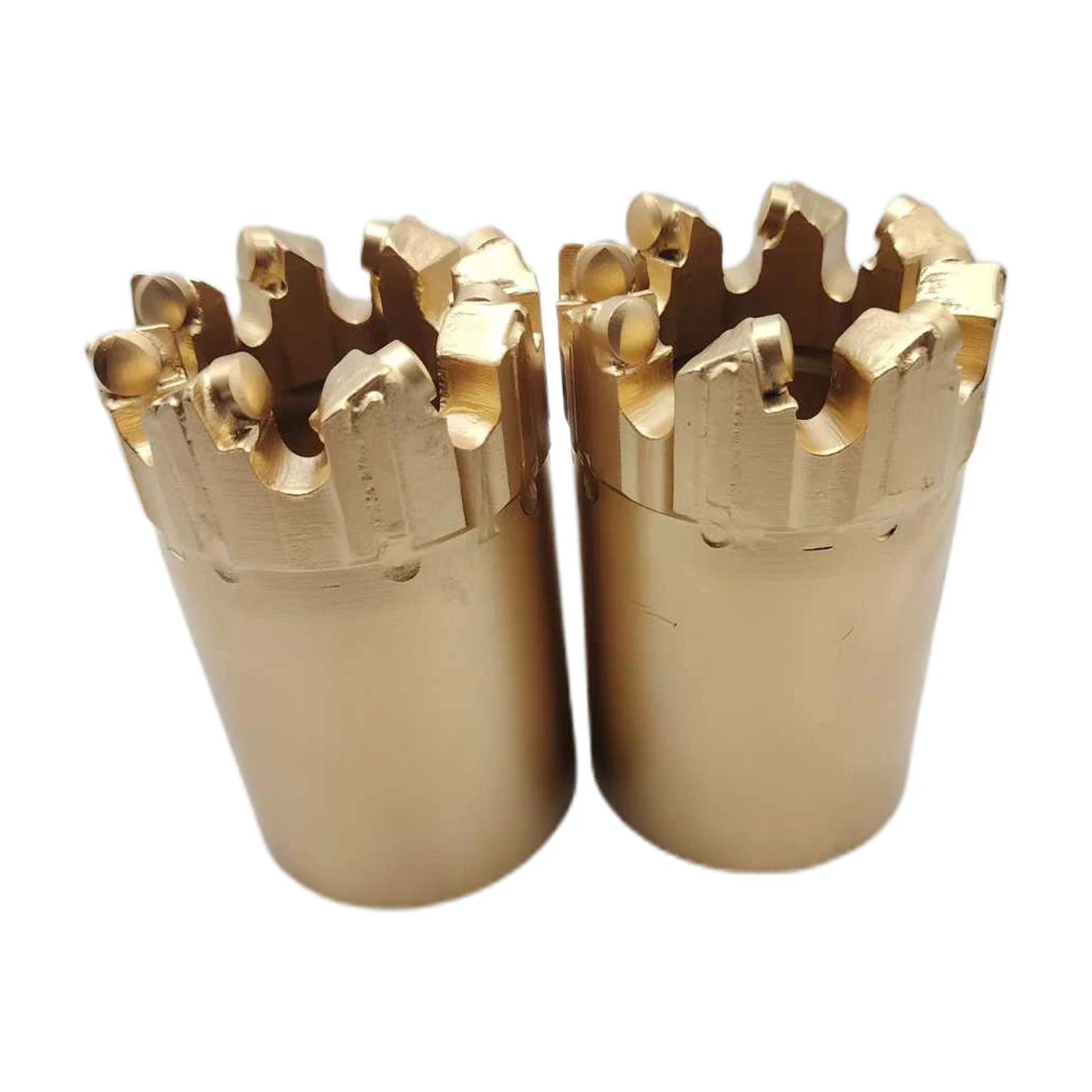
No drawing? Start with the old tool and its mating part
Keep any markings, part numbers and previous order references visible. They can lead back to the original specification more reliably than a single diameter measurement. If the old thread is worn or damaged, photograph the sub or barrel component it connects to as well.
Mark measurements on a photograph so their meaning is clear: “connection outside diameter” and “maximum cutting diameter” are more useful than two unlabelled numbers. Once the connection is agreed, retain its designation and drawing revision with the order. A repeat purchase can then use the same reference.
For a replacement enquiry, send FSDRILL a WhatsApp message with the bit connection, its mating part and any readable markings. Drawings can be emailed to fengsu@pdcdrill.com. Those details give the discussion a much firmer starting point than “the same as the old one.”