
Not sure which drill bit to choose for your mining work? This guide explains the basics in a way that’s easy to follow. You’ll learn about different bit types, how to match them to your job, and what really affects cost and performance.
What Is a Mining Drill Bit and Why It Matters
The Role of Drill Bits and Tools in Mining Operations
If you’ve ever worked on a drilling site, you know that everything starts with the bit. It’s the cutting tool at the very bottom that breaks through rock, soil, or ore to create holes for blasting, sampling, or extraction.
In both open-pit and underground mining, drill bits are used for exploration, core sampling, and production drilling. The type of bit used directly impacts how deep, fast, and cleanly a hole can be made.
Whether you're drilling into soft clay or hard granite, the bit must match the conditions. Bits also work with rods and rigs as part of a system, and if the bit doesn’t perform, the whole operation slows down.
Why Choosing the Right Bit Matters
Choosing the wrong bit for your project can be a costly mistake. It may wear out too quickly, break under pressure, or fail to penetrate the formation, causing wasted time and money.
Downtime from a broken or mismatched bit can delay an entire drilling schedule. In remote locations, every replacement could mean days lost waiting for a new delivery.
Beyond cost, the wrong bit can put equipment and workers at risk. Poor performance may cause excessive vibration, stuck rods, or even borehole collapse in unstable rock.
When you choose the right bit, matched to the ground and rig, you get smoother drilling, better footage, fewer replacements, and safer operations. That’s why bit selection isn’t just technical—it’s strategic.
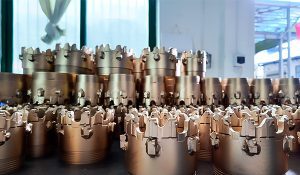
Common Types of Mining Drill Bits Explained
PDC Drill Bits – Fast, Durable, and Designed for Exploration
When you push through shale, coal, or abrasive sandstone, PDC bits slice clean and stay sharp. Fengsu crafts both cutters and body in-house, so you drill farther, swap less, and stay on schedule.
DTH Hammer Bits – High-Impact Performance for Hard Rock
Deep holes in granite or quartzite demand brute force. A DTH hammer delivers piston-like blows that crack the rock while air flushes cuttings, letting your rig reach target depth quickly without overheating.
Drag Bits – Cost-Effective for Soft Formations
If your job is shallow and the ground is clay or loose sand, a drag bit saves cost and setup time. Its simple blade design shears through soft beds and keeps small crews productive with minimal maintenance.
Diamond Impregnated Bits – Precision in Abrasive Formations
Ultra-hard basalt or quartz? Choose an impregnated bit. Microscopic diamonds embedded in a wear-resistant matrix grind the face steadily, giving you clean, vibration-free holes where other bits fail.
Electroplated Diamond Bits – High Accuracy for Specialty Work
For brittle materials like glass, ceramics, or soft stone, an electroplated bit delivers clean edges with minimal cracking. Ideal for instrumentation holes or detailed anchor installs.
Coring Bits – Sampling for Mineral Evaluation
Exploration demands intact cores. Coring bits cut a cylindrical sample while side ports lift debris, preserving rock structure for lab assays. Accurate cores guide reserve estimates and reduce drilling risks.
Cutter Bits and Drill Rods – Structural Backbone
Sharp cutters mean nothing without sturdy rods. Fengsu’s matched sets transmit torque smoothly and resist thread wear, so each revolution drives energy efficiently to the bit face.
How to Choose the Right Drill Bit for Your Mining Project
Match Bit Type to Geological Conditions
Before choosing a bit, think about the ground you’re drilling into. For soft formations like clay or shale, drag or steel-body PDC bits work best. Medium layers call for matrix-body PDCs, while DTH or impregnated bits handle hard rock.
If you're unsure, hybrid or matrix-body PDCs adapt well to mixed geology. Matching your bit to the terrain ensures a consistent rate of penetration and avoids unnecessary wear.
Matrix-Body vs. Steel-Body PDC Bits
Matrix-body bits are built for abrasion. Their composite body holds up in mixed formations and resists cutter loss. Steel-body bits are better in soft rock. They drill faster and are easier to repair on-site.
Choose matrix for durability, steel for speed. If your job calls for precision in soft zones, a steel-body PDC with optimized fluid control offers the best performance.
Align Bit Specs with Rig and Fluid System
Your bit must work in sync with your rig. Always check WOB (weight on bit), RPM, and torque specs. If the bit overloads your rig, it won’t perform and could cause damage.
Thread compatibility is also key. Mismatched threads cause leaks or stress fractures. Choose bits with the right nozzles and mud circulation design for smooth cuttings removal.

Cost, Use Cases, and Buyer Advice
Pricing, ROI, and Performance Value
PDC bit prices range widely depending on size, cutter quality, and brand. Some suppliers outsource parts, but Fengsu controls the entire process, reducing costs by over 50% and improving consistency.
In remote or deep-well drilling, fewer failures mean fewer replacements, less downtime, and better use of your budget. The lowest upfront price doesn’t always deliver the best value.
Selecting the Right Bit for Your Job Site
Bit performance is tied to formation type. Matrix-body works best for abrasive or layered geology. Steel-body excels in softer zones.
For water wells, mineral exploration, or core sampling, PDC bits with balanced fluid flow and stable cutter placement improve ROP and keep the borehole clean and stable.
Key Performance and Cost Factors to Consider
How to Evaluate Cost per Foot Drilled
The real cost of a drill bit is calculated by dividing total cost by footage drilled. Include labor, fuel, and downtime in your estimate. A bit that runs longer may cost more up front but save money in the end.
Compare performance over time. A more expensive bit that drills twice as far with less downtime offers better ROI than a cheaper bit that fails early.
When to Refurbish vs. Replace
Watch for dull cutters, chipped blades, or cracking bodies. If the damage is minor and structure intact, refurbishment can extend life.
If erosion is deep or multiple components fail, replacing is more cost-effective. Refurbishing worn-out bits often leads to early failure and added cost.
Common Pitfalls and How to Avoid Them
Choosing the Wrong Tool for the Formation
Using the wrong bit leads to failure. A PDC in fractured rock might lose cutters. A drag bit in hard rock might jam. The key is knowing your geology and matching bit to conditions.
Pilot testing and supplier advice can prevent these issues. Better to plan ahead than deal with stuck rods or ruined tools.
Bit-Rig Incompatibility
A great bit fails if it doesn’t fit the rig. Thread mismatches, low WOB, or lack of torque reduce performance or cause damage. Power mismatches also increase wear and reduce control.
Check compatibility charts, thread types, and torque limits before you order. Good suppliers will help confirm rig specs.
How to Evaluate a Drill Bit Supplier
Vertical Manufacturing Advantage
Fengsu manages the full manufacturing process—from PDC cutter sintering to bit body forming. This ensures consistent quality, faster lead times, and adaptability to special project needs.
In-house control also allows for quicker response to spec changes, improving delivery and reducing communication breakdowns between departments or vendors.
Certifications, Quality Control, and After-Sales Service
Fengsu meets ISO and API standards and backs each bit with full traceability. Pre-shipment testing and sample tracking prevent quality issues from reaching your site.
If something goes wrong, the tech support team responds quickly with analysis and practical fixes. Long-term partnerships matter, especially in field-critical tools.
Conclusion
Choosing the right drill bit isn’t just about specs. It’s about matching the bit to your formation, rig, and job goals. The right choice improves efficiency, lowers costs, and helps you drill safer and smarter. With this guide, you now have the tools to make confident decisions and get the most value from your drilling investment.